
PLA Filaments for FDM 3D Printers
The most popular printing material for FDM 3D printing
PLA filament is one of the most popular filaments for 3D printing - and it remains the go-to choice for countless makers for good reason. It is exceptionally easy to work with, requires no complex settings, and consistently delivers clean, reliable results. That makes PLA perfect not only for beginners, but also for experienced users looking for a hassle-free everyday filament.
3DJAKE ecoPLA: The trusty Maker standard, Made in Europe.

PLA: 2745 items
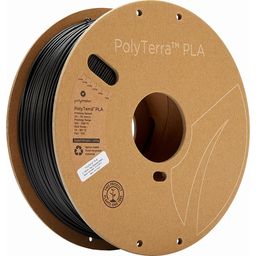
Polymaker PolyTerra PLA Charcoal Black, 1.75 mm / 1000 g
- More environmentally friendly
- Easy processing
- Good rigidity
Delivery by October 21
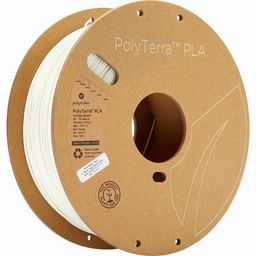
Polymaker PolyTerra PLA Cotton White, 1.75 mm / 1000 g
- More environmentally friendly
- Easy processing
- Good rigidity
Delivery by October 21
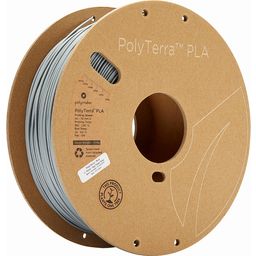
Polymaker PolyTerra PLA Fossil Grey, 1.75 mm / 1000 g
- More environmentally friendly
- Easy processing
- Good rigidity
Delivery by October 21
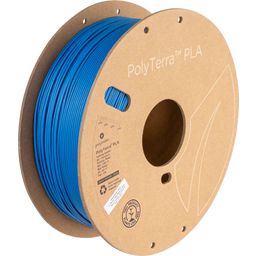
Polymaker PolyTerra PLA Sapphire Blue, 1.75 mm / 1000 g
- More environmentally friendly
- Easy processing
- Good rigidity
Delivery by October 21
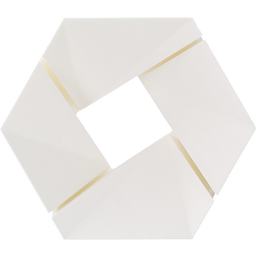
3DJAKE ecoPLA White, 2.85 mm / 2300 g
- Made in EU
- High quality
- Easy to print
Delivery by October 21
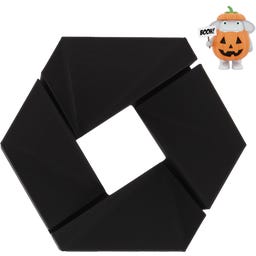
3DJAKE ecoPLA Black, 2,85 mm / 4000 g
- Made in EU
- High quality
- Easy to print
Delivery by October 21
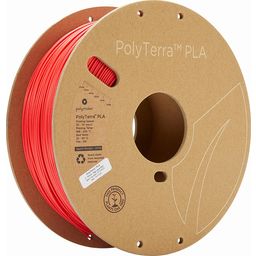
Polymaker PolyTerra PLA Lava Red, 1.75 mm / 1000 g
- More environmentally friendly
- Easy processing
- Good rigidity
Delivery by October 21
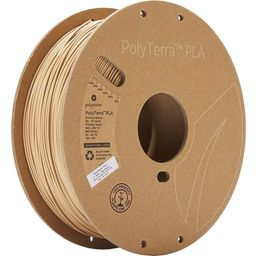
Polymaker PolyTerra PLA Peanut, 1.75 mm / 1000 g
- More environmentally friendly
- Easy printing
- Good rigidity
Delivery by October 21
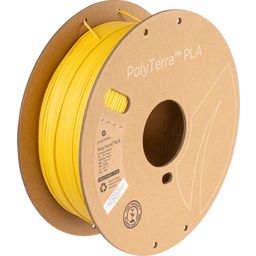
Polymaker PolyTerra PLA Savannah Yellow, 1.75 mm / 1000 g
- More environmentally friendly
- Easy processing
- Good rigidity
Delivery by October 21
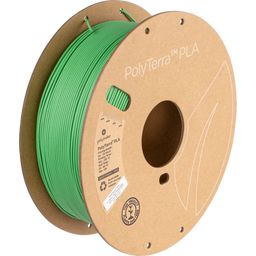
Polymaker PolyTerra PLA Forest Green, 1.75 mm / 1000 g
- More environmentally friendly
- Easy processing
- Good rigidity
Delivery by October 21
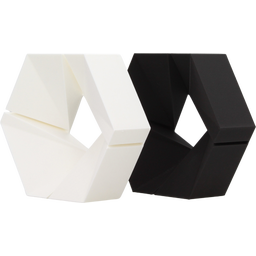
3DJAKE ecoPLA White & Black Economy Set, 2 x 1.75 mm / 1000 g
- 2x 1000g ecoPLA
- Made in the EU
- High-quality materials
Delivery by October 21
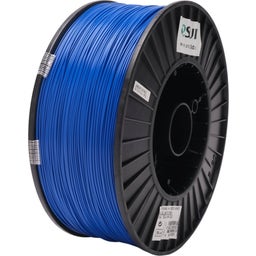
eSUN PLA+Blue, 1.75mm / 3000g
- Increased strength and toughness
- Excellent layer adhesion
- High printer compatibility
Delivery by October 21
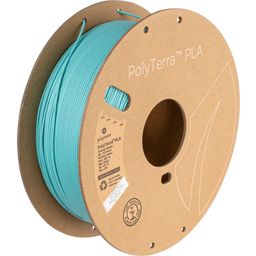
Polymaker PolyTerra PLA Arctic Teal, 1.75 mm / 1000 g
- More environmentally friendly
- Easy processing
- Good rigidity
Delivery by October 21
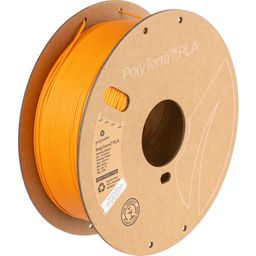
Polymaker PolyTerra PLA Sunrise Orange, 1.75 mm / 1000 g
- More environmentally friendly
- Easy processing
- Good rigidity
Delivery by October 21
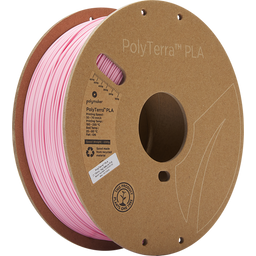
Polymaker PolyTerra PLA Sakura Pink, 1.75 mm / 1000 g
- More environmentally friendly
- Easy printing
- Good rigidity
Delivery by October 21
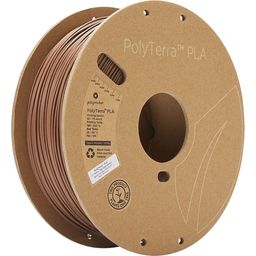
Polymaker PolyTerra PLA Earth Brown, 1.75 mm / 1000 g
- More environmentally friendly
- Easy printing
- Good rigidity
Delivery by October 21
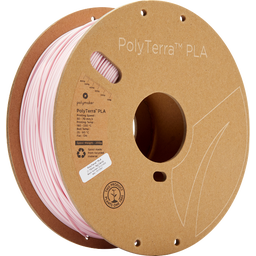
Polymaker PolyTerra PLA Candy, 1.75 mm / 1000 g
- More environmentally friendly
- Easy processing
- Good rigidity
Delivery by October 21
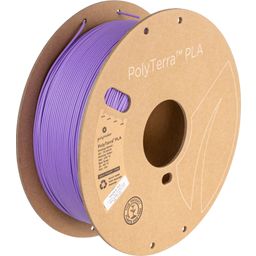
Polymaker PolyTerra PLA Lavender Purple, 1.75 mm / 1000 g
- More environmentally friendly
- Easy processing
- Good rigidity
Delivery by October 21
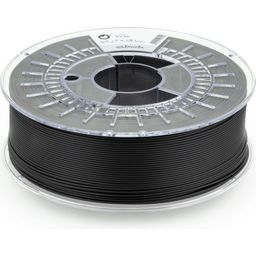
Extrudr PLA NX2 Matt Black, 1.75mm / 1000g
- Matte finish
- Non-toxic
- Good mechanical properties
Delivery by October 21
3DJAKE ecoPLA Red, 1,75 mm / 1000 g
- Made in EU
- High quality
- Easy to print
Delivery by October 21
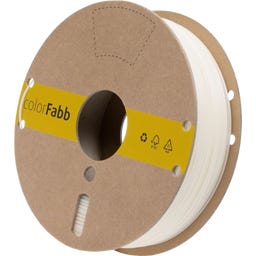
colorFabb LW-PLA Natural, 1.75 mm (750 g)
- Foam technology
- Reduced weight
- Matte surface
Delivery by October 21
3DJAKE ecoPLA Transparent, 1,75 mm / 1000 g
- Made in EU
- High quality
- Easy to print
Delivery by October 21
3DJAKE ecoPLA Pink, 1,75 mm / 1000 g
- Made in EU
- High quality
- Easy to print
Delivery by October 21
Bambu Lab PLA Basic Jade White, Refill (1.000 g)
- Easy to print
- Good rigidity & strength
- Ideal for high-speed printing
Delivery by October 21
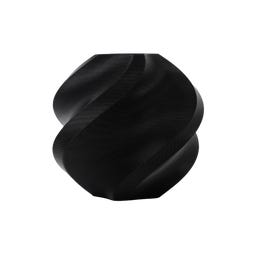
Bambu Lab PLA Basic Black, Spool (1.000 g)
- Easy to print
- Good rigidity & strength
- Ideal for high-speed printing
Delivery by October 21
3DJAKE ecoPLA Pastel Pink, 1,75 mm / 1000 g
- Made in EU
- High quality
- Easy to print
Delivery by October 21
3DJAKE ecoPLA Orange, 1,75 mm / 1000 g
- Made in EU
- High quality
- Easy to print
Delivery by October 21
3DJAKE ecoPLA Yellow, 1,75 mm / 1000 g
- Made in EU
- High quality
- Easy to print
Delivery by October 21
3DJAKE ecoPLA Light Grey, 1,75 mm / 1000 g
- Made in EU
- High quality
- Easy to print
Delivery by October 21
3DJAKE ecoPLA Silver, 1,75 mm / 1000 g
- Made in EU
- High quality
- Easy to print
Delivery by October 21
What is PLA filament?
PLA, short for polylactic acid, is a bio-based plastic made from renewable raw materials such as corn starch or sugarcane. In 3D printing, PLA filament is known for its low odour emission, relatively low printing temperatures and excellent surface quality. For this reason, PLA filament is the most widely used material and the perfect all-rounder in FDM 3D printing.
Why is PLA filament so popular?
PLA filament is popular because it is particularly easy to print and works on most 3D printers without much effort. Both beginners and experienced makers appreciate PLA for delivering fast, reliable results with consistent performance.
The key advantages at a glance:
- easy processing without specialist knowledge,
- low printing temperatures,
- minimal warping, even without an enclosed build chamber,
- clean surfaces & high level of detail,
- wide range of colours.
If you want stress-free printing, PLA filament is your best friend.
Which PLA filament is the best?
The best PLA filament is the one that matches your printer, your project and your expectations. There is no single perfect PLA for every application; what truly matters is consistent material quality.
You can recognise a good PLA filament by:
- a consistent diameter,
- neat, even winding,
- stable material flow.
These factors ensure reliable printing, clean detail reproduction and minimal risk of clogging or failed prints.
Print characteristics also play an important role: high-quality PLA prints well at moderate temperatures, adheres reliably to the build plate and shows only minimal tendency towards warping or stringing. This makes it attractive for both beginners and experienced makers.
You should also consider your intended application. For decorative objects and models, surface quality and colour consistency are key, while dimensional accuracy and strength are more important for functional parts.
Which PLA filament is suitable for beginners?
Beginners are advised to start with a classic PLA filament designed for stable printing properties and ease of use. A good entry-level PLA prints at low temperatures, adheres reliably to the build plate and tolerates minor setting inaccuracies.
For getting started, we recommend PLA without special additives or effects. Pure PLA is particularly straightforward, does not require an enclosed build chamber and works well with most standard profiles. This allows you to focus on learning and experimenting rather than fine-tuning settings. Once PLA is your best friend and you want to get more out of your prints, you can move on to more advanced materials.
What is PLA filament particularly suitable for?
PLA filament is ideal for parts where appearance and fine detail are key:
- decorations & figurines,
- models & prototypes,
- enclosures & brackets without heat exposure,
- multicolour prints,
- presentation and display objects.
In short, thanks to its dimensional stability and smooth surface finish, PLA is excellent for visible components.
What is the density of PLA filament?
The density of PLA filament is approximately 1.24 g/cm³. This value may vary slightly depending on the formulation and additives, but serves as a reliable guideline for material calculations.
In 3D printing, density is particularly relevant when estimating how much filament is required for a project or how many prints can be produced from a single spool.
Is PLA filament waterproof?
PLA filament is not waterproof, but it is reasonably resistant to water in everyday use. Printed PLA parts can withstand splashes or brief contact with moisture, making them suitable for many indoor applications.
However, prolonged exposure to water or very high humidity can gradually reduce stability. PLA slowly absorbs moisture and may become brittle over time. For outdoor use or permanently wet conditions, PLA is therefore only suitable to a limited extent.
What is the difference between PLA and PLA+?
The difference between PLA and PLA+ lies primarily in the formulation. PLA+ is also based on PLA but is modified with additional additives to enhance certain properties.
Classic PLA is easy to process, offers good surface quality and is easy for beginners to print. PLA+ goes a step further, offering increased toughness, reduced brittleness and improved durability. As a result, PLA+ prints are often better suited for functional parts subject to everyday stress.
Depending on the formulation, PLA+ may also provide improved layer adhesion, higher impact resistance or slightly enhanced temperature resistance. However, properties can vary, as PLA+ is not a standardised term and formulations differ between manufacturers.
Are there disadvantages to PLA filament?
Yes, PLA filament also has its limitations. PLA is not heat-resistant and begins to soften at around 55–60 °C, meaning parts can deform at these temperatures. It is therefore only partially suitable for components exposed to heat, direct sunlight or warm environments.
Mechanical strength is also limited compared to technical plastics. PLA is relatively rigid and may fracture more easily under heavy or prolonged stress. For highly stressed functional parts, alternative materials such as PETG, ABS, ASA, PA or PC may be more suitable.
Additionally, PLA is sensitive to moisture. If not stored properly, the filament can become brittle and print quality may suffer. Dry, airtight storage is therefore particularly important.
Is PLA filament safe?
PLA is made from renewable raw materials and is generally considered safe in its raw form. However, 3D printing introduces additional processing factors such as print parameters, additives, colour pigments and surface characteristics of the printed part, which may influence suitability depending on the application.
As the specific processing and end use are beyond our control, we cannot provide a universal statement covering all possible applications.
Is PLA filament food-safe?
PLA is produced from renewable raw materials and is well established as a base material. However, whether a printed PLA part is suitable for food contact depends on several factors.
These include the exact filament composition, colourants and additives used, as well as the 3D printing process itself. The layer structure created during printing may also affect suitability, as it can result in a rougher surface.
Direct food contact is therefore only recommended if appropriate certifications are available or suitable post-processing has been carried out. For long-term or direct food contact, materials explicitly approved for this purpose should be preferred.
How long does PLA filament last?
When stored correctly, PLA filament can last for years. The key factor is protection from moisture. Ideally, store your PLA:
- in a dry environment,
- airtight,
- with desiccant,
- protected from direct sunlight.
This helps prevent brittleness and ensures clean printing even after extended storage.
How long does it take for PLA to break down in soil?
PLA is made from renewable raw materials and is biodegradable under the right conditions. However, effective decomposition requires specific environmental factors such as elevated temperatures, sufficient moisture and controlled processing conditions.
In natural settings like soil or home compost, these conditions are typically not met. As a result, PLA degrades very slowly and can remain stable for a long time. In contrast, industrial composting facilities provide the necessary controlled environment, allowing PLA to break down within a few weeks to several months.
For this reason, PLA should be used and disposed of in line with its material properties. Only under appropriate composting conditions can its biodegradable potential be fully realised.
Where can I purchase PLA filament?
PLA filament is widely available today through specialist retailers, online shops and dedicated 3D printing suppliers. Key considerations include a broad selection, transparent product information and the ability to find the right PLA for your printer and project.
At 3DJake, you will find an extensive range of PLA filaments in many colours, versions and price categories, so you can compare the various options and choose the material that best meets your requirements.
Discover popular categories
- PLA Beige Filaments
- PLA Blue Filaments
- PLA Multicoloured Filaments
- PLA Transparent Filaments
- PLA Natural Coloured Filaments
- PLA White Filaments
- PLA Yellow Filaments
- PLA Orange Filaments
- PLA Red Filaments
- PLA Pink Filaments
- PLA Violet Filaments
- PLA Green
- PLA Turquoise Filaments
- PLA Brown Filaments
- PLA Grey Filaments
- PLA Silver Filaments
- PLA Black Filaments
- PLA Gold Filaments
- PLA Brass Filaments
- PLA Filament Glow-in-the-Dark
- PLA Colour Change
- PLA Filaments 1.75 mm
- PLA Filaments 2.85 mm
- Recycled PLA
- Refill PLA Filament
Magazine Articles:
-
Great Britain: Free standard delivery from £69.90
-
Free
returns More than 11.200 products
We deliver worldwide to
more than 40 countries
